The Chedgzoy Name
A rare Somerset surname with roots in Anglo-Saxon England
Chedgzoy is an uncommon English surname. Fewer than about 150 people carry it worldwide. This page gathers what I have been able to find out about where the name comes from, how it has been spelled over the centuries, who has carried it, and where it is found today. It is a work in progress; I plan to add to it as I dig through my own family tree.
Origin: a place in Somerset
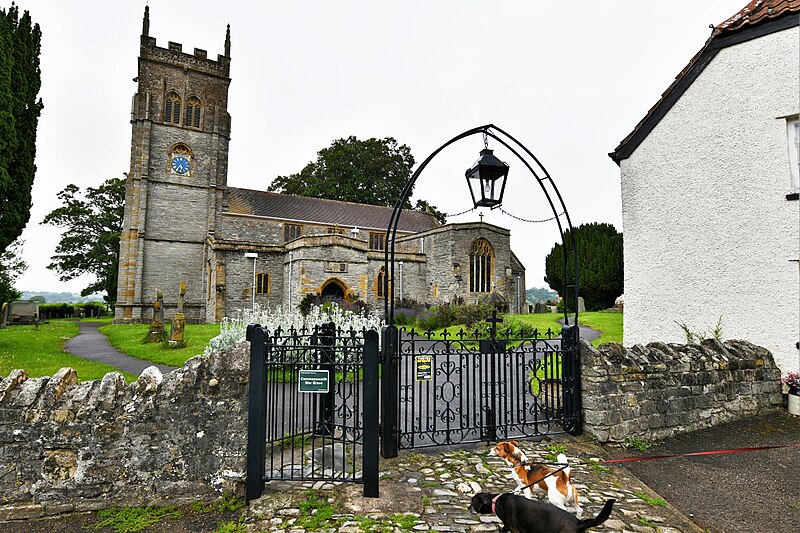
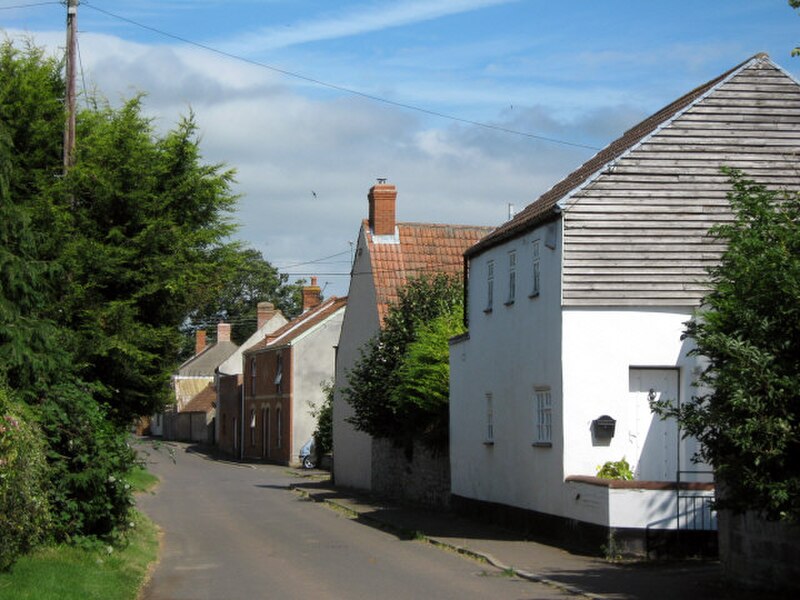
Chedgzoy is a locational surname, meaning it originally identified someone as being "of" or "from" a particular place. That place is the village of Chedzoy in Somerset, a few miles east of Bridgwater on the Somerset Levels.
The place-name itself is Anglo-Saxon. It is formed from the Old English personal name Cedd plus the element eg meaning "island". The literal sense is "Cedd's island". The "island" was a patch of slightly raised ground standing above the seasonally flooded wetlands of the Levels, which is exactly the kind of defensible, farmable spot early settlers sought out.
The place-name is astonishingly old. It appears as Chedesie in the Cartularium Saxonicum under the year 729 AD, which makes it one of the earlier attested settlement names in the West Country.
Chedzoy remains a small place. The 2021 census recorded a population of 447 across 179 households. Numbers have fluctuated within a narrow band for centuries: 457 in 1801, peaking at 549 in 1831, falling to 317 by 1891, and staying around the 300 to 450 mark ever since.
First recorded bearer
The surname, as distinct from the place-name, is first recorded in the early 14th century. The earliest known bearer is John Chedesy, who appears in 1328 in Kirby's Quest, a feudal register for Somerset, during the reign of Edward III.
Spelling variants
English surnames were not standardised until relatively recently, and Chedgzoy is a good example of how much a name can drift. Recorded variants include:
- Chedzoy
- Chedsey / Chedesy
- Chedgey
- Chidgey
- Cheddgey
- Chedgie
The form Chedzoy lines up with the modern spelling of the Somerset village. The others (Chedgey, Chidgey, Chedgie) preserve the traditional pronunciation more faithfully (roughly "chej-ee"), which is why the spelling "Chedgzoy" can trip people up on first sight: the "zo" is effectively silent in older usage.
Where the Chedgzoys went
Despite its Somerset origins, the Chedgzoy form of the name migrated north. By the 1891 census, the highest concentration of families spelling their name "Chedgzoy" was in Cheshire, with the county's small cluster of households accounting for the bulk of the British total that year. The name remains rare: modern estimates put the number of bearers in England at around 110, with a handful more in the United States, Canada and Australia through later emigration.
Family history: Edward Chedzoy and the Monmouth Rebellion (1685)
One documented line of the family runs through Edward Chedzoy, the third child of Robert and Elizabeth Chedzoy, baptised on 11 June 1663. Charles II was on the throne at the time. His story is bound up with one of the most dramatic episodes in West Country history: the Monmouth Rebellion.
The rebellion
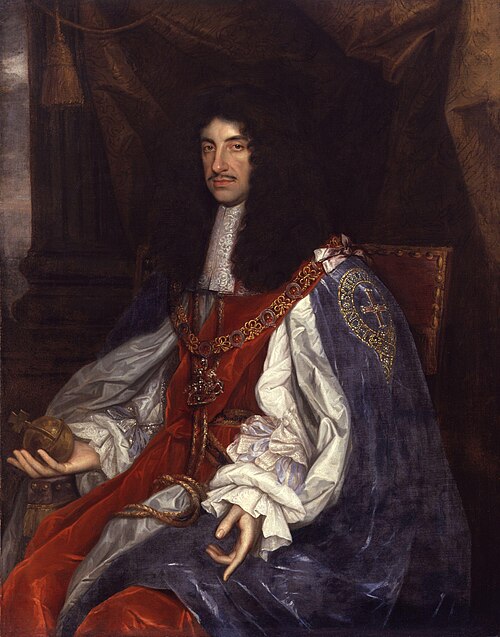
Charles II had an illegitimate son, James Scott, Duke of Monmouth (a Protestant). His brother, James, Duke of York (a Catholic), took the throne as James II when Charles died in February 1685. Edward Chedzoy and his brother Robert were in their twenties at this point.
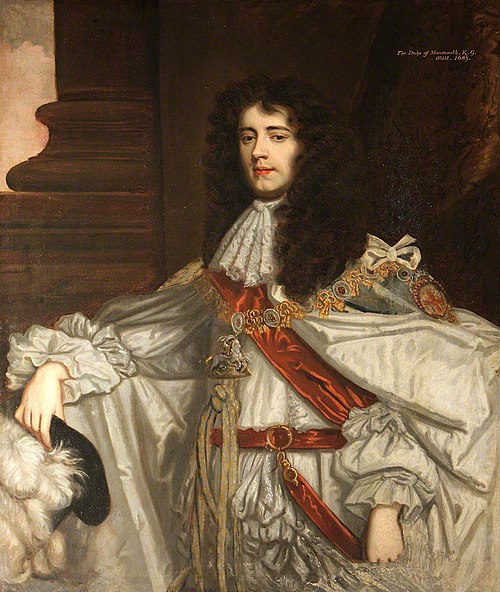
Monmouth, then in Holland, was pressed by his advisers to challenge the throne, banking on Protestant support; his rising was timed to coincide with a parallel revolt in Scotland led by the Earl of Argyll. He landed at Lyme Regis and marched inland. His army was largely peasants and poor farmers, but the campaign went well at first: by the time he reached Taunton he was declared king. Rather than take Bristol, he withdrew to Bridgwater, pursued by Lord Feversham. News then arrived that Argyll had been captured, and many supporters melted away. It is at this point that Edward and Robert Chedzoy appear to have joined the rebel cause.
The Battle of Sedgemoor
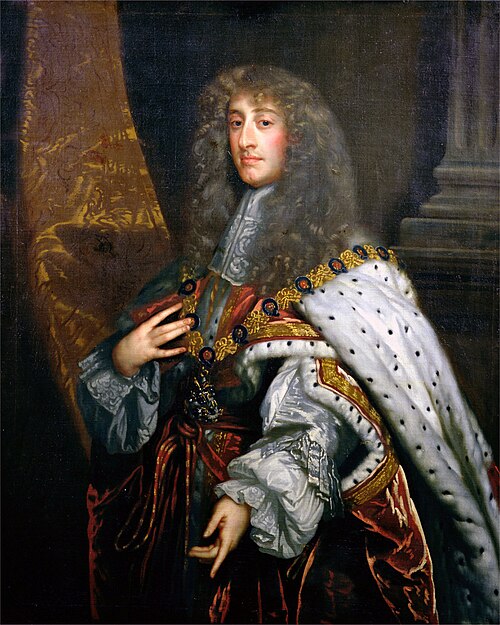
The rebels left Bridgwater late on the night of 5 July 1685 for a silent night attack on the royal camp. A shot fired prematurely gave the advance away. The battle took place at Westonzoyland on Sedgemoor in the early hours of 6 July, starting between one and two in the morning and lasting about an hour and a half. Around 1,300 rebels were killed, some 500 were captured and herded into the parish church, and 80 more were wounded, five dying during the night. Conditions in the church were so grim that it had to be fumigated once the prisoners were removed. Edward Chedzoy is assumed to have been among them.
The Bloody Assizes
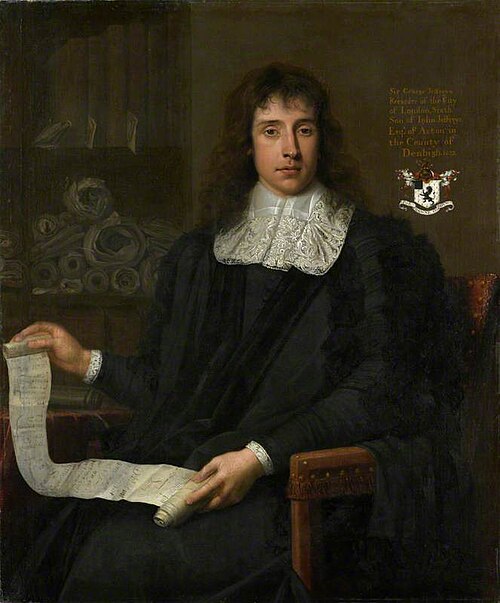
On 23 September 1685 at Wells, Edward Chedzoy was tried before the notorious Chief Justice Jeffreys at the Court of Oyer and Terminer for Dorset, Somerset and Devon, part of what became known as the Bloody Assizes. He was convicted of waging war against the king and sentenced to transportation to the Americas. His name is one of the last on the roll for that day (sentence formally enrolled on 4 February 1691). He sailed on the Constant Richard to Jamaica.
His brother Robert never came to trial. The assumption is that he died in prison before he could be brought before the court.
The direct paternal line
The line below follows the father-to-son descent that carries the Chedzoy / Chedgzoy name, ending with me in the Midlands. It comes in two halves. From me back to John Chedzoy (born 1798) every generation is documented in census returns, civil registration and parish records. Above John the trail breaks: his own parentage has not yet been established by record, so the descent from the older Chedzoy family of Stoke St Gregory shown above him – and through them back to the 1600s and the Sedgemoor generation – is a strong but unproven working theory I am still researching. The break is marked in the chain below. Daughters, spouses from other families and collateral branches are omitted here for clarity (they are in the full tree).
Here the documented line ends and the working theory begins. Everything below this point, from John (b.1798) down to today, is evidenced by record. Everything above it – the older Chedzoy family of Stoke St Gregory and the line back to the Sedgemoor generation – is a strong but unproven hypothesis. John's parentage has not been established by record, so the exact link joining the two halves is not yet proven.
On the spelling change: Chedzoy to Chedgzoy
The direct line carries the spelling Chedzoy back through the generations as far as John (b.1798). From his children onwards, the spelling in the family's own records shifts to Chedgzoy, and it has stayed that way ever since.
The family story attached to this is that the extra "g" was added on purpose at a cousin marriage: that John married a Chedzoy cousin and the couple altered the spelling to set their new household apart, quietly drawing a veil over the fact. It is a good story, and the very same tale turns up independently in the Cheshire (Everton) branch, but the evidence points the other way.
It is a good story, but the evidence points the other way. The likeliest explanation is the duller one: ordinary clerical and phonetic drift, the same thing that had already happened to this name and to a great many other Somerset surnames.
- The spelling "Chedgzoy" was already in use in the Stoke St Gregory parish registers in the 18th century, where a Walter and Jane Chedgzoy are recorded. It predates John and Ann and was not their invention.
- The same couple were written down as "Chidgey" in the 1851 census, and their son Edmund appears as "Chedzzoy" in the 1881 census. The spelling was set by whichever clerk or enumerator held the pen, not chosen by the family. (WikiTree)
- The very same "a cousin marriage added the extra G" story turns up independently in the Cheshire (Everton) branch, where it is said that when Annie Chedzoy married her cousin Joseph Chedzoy they signed the register with a G in error. There too it is remembered as a mistake, not a disguise.
- There was nothing much to hide. First-cousin marriage had been legal in England since 1540 and was common in the 19th century; Charles Darwin married his first cousin Emma Wedgwood in 1839.
- And it could not have worked in any case. Changing a single letter would not conceal that bride and groom already shared a surname, and every marriage was announced in public by banns or licence.
So the spelling shift is best read as everyday clerical and phonetic drift rather than a deliberate act. Its overlap with the cousin marriage is most likely coincidence, with the family lore growing up afterwards to tie the two together.
Notable bearers
Sam Chedgzoy (1889–1967): the man who rewrote a football rule
I'm still looking for a freely licensed photograph of Sam to include here. If you own one, or know where one is held under a permissive licence, please get in touch.
Sam Chedgzoy is by some distance the most famous Chedgzoy. Born in Ellesmere Port, he was an outside-right for Everton (300+ appearances) and won 8 caps for England between 1920 and 1924.
His place in football history, though, is not just about goals. In 1924 the Laws of the Game were changed to allow a goal to be scored directly from a corner kick. Sam spotted that the new wording did not explicitly forbid the kicker from playing the ball a second time. At a match against Arsenal at Goodison Park on 15 November 1924, he famously dribbled the ball in from the corner flag rather than crossing it. Accounts differ on whether the ball actually went in (several say it struck the side-netting), but the point was made, and the football authorities promptly amended the Law to close the loophole, introducing the now-familiar rule that the corner-taker cannot touch the ball again until someone else has played it. A Chedgzoy, in other words, is directly responsible for the modern corner-kick rule.
Read the full profile of Sam Chedgzoy → — his career, the corner-kick story, and the records showing how he links into this family tree.
A note on pronunciation
For the record: most branches of the family pronounce it roughly "chej-oy" or "chej-ee", not "ched-g-zoy". The Somerset village is pronounced the same way; the spelling looks fiercer than the name actually sounds.
Sources and further reading
- SurnameDB: Chedzoy
- Forebears: Chedgzoy distribution
- Ancestry.co.uk: Chedgzoy family history
- Geneanet: Chedzoy
- Monmouth Rebellion (Wikipedia)
- The Battle of Sedgemoor (Zoyland Heritage Fund)
- Bloody Assizes (Wikipedia)
- Sam Chedgzoy (Wikipedia)
- Sam Chedgzoy, a star on both sides of the Atlantic (Everton FC Heritage Society)
- Stoke St Gregory family names (Gregory Stoke)
- Chedgzoy genealogy (WikiTree)
- Marriage (Prohibited Degrees of Relationship) Bill debate, on the legality of cousin marriage (Hansard)
If you're a Chedgzoy (or a Chedgey, Chidgey, Chedzoy…) and you have something to add (a family story, a photograph, a correction), I'd love to hear from you – drop me a note.